
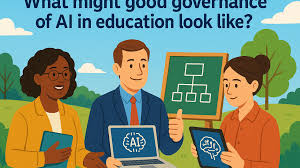
Artificial intelligence (AI) has rapidly entered classrooms worldwide, and Indonesia is now considering legislative measures to ensure its responsible use. A member of the House of Representatives (DPR) recently proposed that the National Education Bill (RUU Sisdiknas) should include clear guidelines on the ethical and wise use of AI in education.
The proposal comes amid growing concerns that unregulated adoption of AI tools—ranging from automated grading systems to generative content platforms—could pose challenges to students and educators alike. Lawmakers emphasize that AI should not replace the role of teachers but rather serve as an assistive technology to improve the quality of learning.
This marks one of the first serious attempts in Indonesia’s legislature to address AI governance within the national education system, highlighting the urgency to align education policy with technological change.
Supporting Teachers and Students with AI
According to the DPR member who introduced the idea, AI can be an effective companion in teaching and learning when used responsibly. For teachers, AI could help streamline administrative tasks, design personalized learning modules, and provide deeper data analysis on student performance.
Meanwhile, students could benefit from access to adaptive learning platforms, instant translation tools, and interactive tutoring assistants. However, the legislator underlined that this transformation must be accompanied by strict safeguards to prevent overreliance or misuse.
Educational https://malaka555.sg-host.com/ also stress the importance of teacher training in AI adoption. Without proper understanding, educators may either reject these tools outright or use them in ways that do not align with pedagogical best practices. Therefore, embedding AI literacy into teacher development programs is seen as a crucial step.
Guardrails Against Ethical Risks
The legislative proposal highlights not only the benefits of AI but also its potential risks. Concerns such as academic dishonesty, data privacy breaches, and the spread of biased or inaccurate information were brought up during preliminary discussions.
For instance, AI-powered writing assistants could make it easier for students to submit assignments without genuine effort, while facial recognition systems in schools may raise questions about surveillance and consent. To address these issues, lawmakers recommend establishing ethical standards and integrating them into the Sisdiknas framework.
These guardrails would include transparency in how AI systems are used, accountability mechanisms for educators and institutions, and strict compliance with data protection laws. Such measures are expected to ensure that AI complements, rather than compromises, the integrity of Indonesia’s education system.
Building a Future-Ready Education Ecosystem
The inclusion of AI governance in the National Education Bill could be a turning point for Indonesia’s education landscape. By embedding responsible AI use into law, the government would set a precedent for future-ready learning environments where students are equipped not only with knowledge but also with digital ethics.
Observers note that if passed, the bill would make Indonesia one of the first countries in Southeast Asia to legislate the role of AI in education at a national level. This move could inspire other nations in the region to follow suit, promoting a balanced approach between embracing innovation and protecting human values in schools.
The proposal remains under discussion, but it reflects a growing awareness among policymakers that education reform must evolve alongside technological breakthroughs. With AI becoming increasingly intertwined with daily life, ensuring its wise and ethical use in classrooms may shape the next generation of Indonesian learners.